
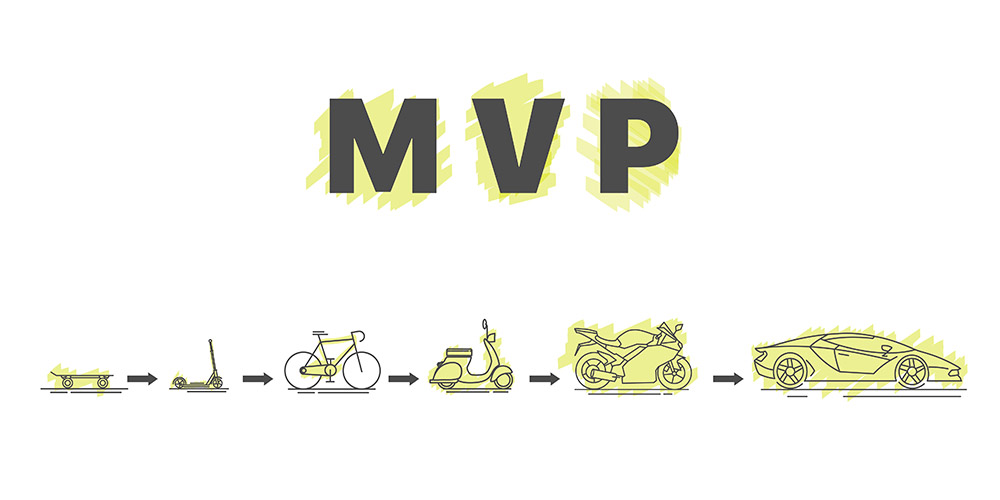
What founders get wrong about MVPs
Founders are often told to build an MVP quickly, which is directionally right but easy to misunderstand. The problem is that “move fast” often gets interpreted as “build carelessly”, and the result is something that is neither truly minimal nor meaningfully viable.
A good MVP is not just the cheapest version of an idea. It is the smallest version that can teach you something important while still being coherent enough for real users to engage with seriously.
The common mistakes
- Trying to prove everything at once instead of validating one key assumption.
- Cutting corners that create immediate delivery drag rather than useful speed.
- Confusing a prototype, a demo and a viable product.
- Underestimating how much build quality matters once real users arrive.
What viability really means
Viability is about whether the product can stand up to real usage long enough to generate insight, feedback or revenue. That does not mean enterprise-grade everything. It does mean enough thoughtfulness in the architecture, UX and implementation to avoid the whole thing collapsing under its own shortcuts.
Speed still matters
None of this is an argument for slow, over-designed product builds. It is an argument for disciplined speed. The right goal is fast learning with foundations that do not immediately punish you for moving quickly.
The better framing
The most useful way to think about an MVP is this: what is the smallest thing we can ship that gives us a real signal, while leaving us a sensible path to improve it if the signal is good? That framing usually leads to much better product decisions.
Get In Touch
If you are shaping an MVP or early product and want to balance speed with better technical judgment, please get in touch.
Related Articles

In-House vs Managed AI: A Practical Decision Framework