
AI Agents, Chatbots and Automation: What’s the Difference?
One of the easiest ways to get lost in AI discussions is to let three different ideas collapse into one: chatbots, automation and AI agents. They often get described as if they are interchangeable. They are not. Sometimes they overlap. Sometimes one contains elements of the others. But they solve different kinds of problems, create different operational demands and justify different levels of investment.
That distinction matters because a lot of businesses are currently buying or building the wrong thing for the job. A chatbot gets described as an agent. A workflow automation gets dressed up as AI. An agent gets proposed where a narrower system would be cheaper, safer and more useful. Once the language becomes fuzzy, the decision-making usually gets worse.
The practical question is not which label sounds most advanced. It is which kind of system best fits the work you actually need done.
What a chatbot is really for
A chatbot is fundamentally a conversational interface. It responds to prompts, answers questions, guides users through simple interactions and helps surface information. The sophistication can vary wildly, from rigid scripted flows to LLM-backed conversation, but the core job is usually the same: respond within a defined interaction pattern.
That makes chatbots useful for support triage, FAQs, guided information retrieval, simple lead capture and narrow front-door experiences. In many cases, that is exactly the right tool. The mistake is assuming that because a chatbot can answer questions, it is automatically the right architecture for work that needs multi-step reasoning, tool use or operational follow-through.
What automation is really for
Automation is about reducing manual effort in repeatable processes. It does not need to be conversational, and it does not need to be AI-driven. In fact, the best automation is often the least glamorous. Data moves from one system to another. A trigger fires. A workflow advances. A status changes. A report gets generated. A person no longer has to do the same low-value step ten times a day.
This is an important point because many businesses reach for AI when they really just need better automation. If a process is structured, predictable and rules-based, conventional automation may be cheaper, more reliable and easier to maintain than introducing a model into the loop. AI becomes interesting when the process includes ambiguity, unstructured inputs, language-heavy work or decisions that benefit from probabilistic reasoning. But not every repetitive task needs intelligence.
What an AI agent is really for
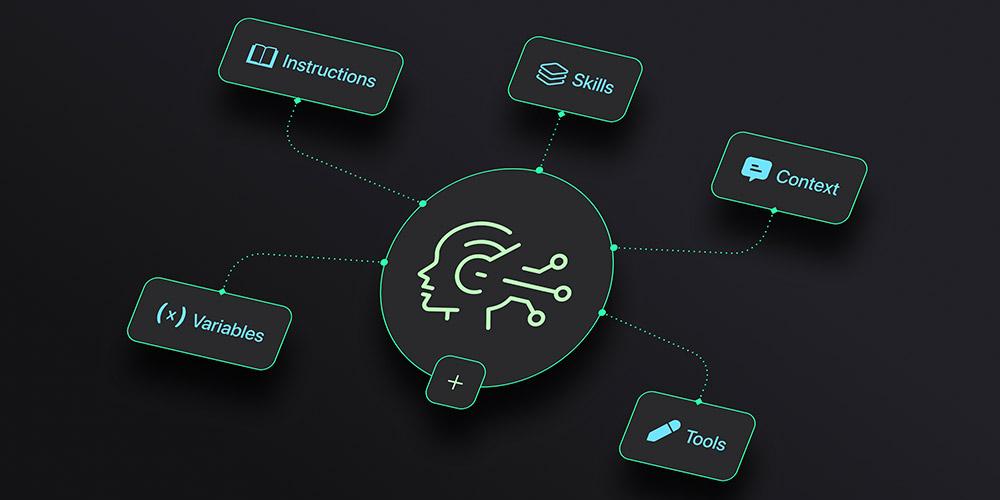
An AI agent sits in a different category. A useful agent does more than answer or trigger. It can reason across a task, choose from tools, work through intermediate steps, maintain enough context to make better decisions and move toward an outcome rather than simply responding to a single message. That does not make it magical. It just makes it more structurally capable than a standard chatbot and more adaptive than a fixed workflow.
That capability is powerful, but it also creates higher expectations. Agents usually require stronger permissions design, clearer boundaries, better observability, more thoughtful review flows and tighter operational ownership. If a business reaches for an agent when a chatbot or workflow automation would do, it can end up paying more for flexibility it does not need.
Why businesses confuse them
Part of the confusion comes from vendors, naturally. “Agent” currently sounds more advanced than “chatbot” and more strategic than “automation”. Part of it also comes from the fact that modern systems can blur the lines. A chatbot may call tools. An automation may use an LLM step. An agent may expose itself through a chat interface. Once those boundaries soften, people often start using the labels as if they mean roughly the same thing.
But architecture still matters. A chat UI does not make something an agent. A model call does not make something intelligent enough to justify agent language. And a system that strings actions together is not necessarily a good automation if it is more fragile than the manual process it replaces.
How to choose the right one
The simplest way to choose is to start with the shape of the work, not the technology label.
- If the main job is answering questions or guiding a user through a narrow interaction, start with a chatbot.
- If the main job is moving information or advancing a repeatable process, start with automation.
- If the main job requires handling ambiguity, using tools, making bounded decisions and working across multiple steps toward an outcome, then an agent may be justified.
This sounds simple, but it filters out a lot of waste. It stops businesses from overbuilding. It also prevents the opposite mistake, which is under-building with a chatbot when the real opportunity requires a more capable workflow system.
The commercial lens matters more than the label
From a commercial perspective, the real issue is not whether a business has an agent strategy or a chatbot strategy. It is whether the system removes friction, improves service, reduces effort, increases throughput or creates product value at a sensible cost. The label matters only so far as it helps you choose the right architecture. Once the wrong label pushes the wrong build, it becomes expensive noise.
A chatbot can be commercially excellent if it solves a clear support or conversion problem cleanly. A piece of automation can be extremely high-value without involving any AI at all. And an AI agent can create meaningful leverage when the work genuinely benefits from context, reasoning and tool use. None of these is inherently superior in every case. They are just different answers to different kinds of problems.
The practical mistake to avoid
The biggest practical mistake is starting with the urge to deploy “AI” rather than with a well-defined operational or product problem. Once that happens, teams tend to retrofit a technology story onto a workflow that may not need it. A cleaner process might need automation. A self-service layer might need a chatbot. A more complex internal process might justify an agent. But you only arrive at the right answer if the problem definition comes first.
Choose architecture, not fashion
AI agents, chatbots and automation all have a place. The right choice depends on the shape of the work, the level of ambiguity involved, the cost of errors and the commercial value of solving the problem properly. That is not as exciting as simply calling everything an agent. It is, however, much more likely to lead to a system that is useful, maintainable and worth paying for.
Get In Touch
If you are trying to work out whether a workflow needs a chatbot, a cleaner automation layer or a more capable AI agent system, please get in touch.
Related Articles
How to use OpenClaw for AI automation in a real business