Could a small business use a team of AI agents?
An enquiry comes into a shared inbox. It concerns an existing customer, but the person who usually handles that account is away. Someone needs to find the customer history, check what has been agreed, ask about current availability and put together a reply. The enquiry may take ten minutes of actual work, spread across most of a morning.
That is the kind of process I would examine with a company interested in AI agents. There is information to gather, some judgement to apply and a point at which a person should decide what goes to the customer. A team of agents could help with different parts of it. Whether that is worthwhile depends on how often the work occurs, how much time it takes and how reliably the company’s information can be found.
I’m Darryl, CTO of Bonbon Group. I work with businesses on the technical decisions behind systems like this, from an initial workshop through to building and improving the workflow. I use OpenClaw in my own work, but I would not start a client conversation by prescribing a particular tool or number of agents. I would start by asking someone to show me what happens to the next enquiry that arrives.
What would the agents actually do?
Let’s stay with that inbox example. This is an illustration of a possible workflow, rather than a description of a system already running for a client.
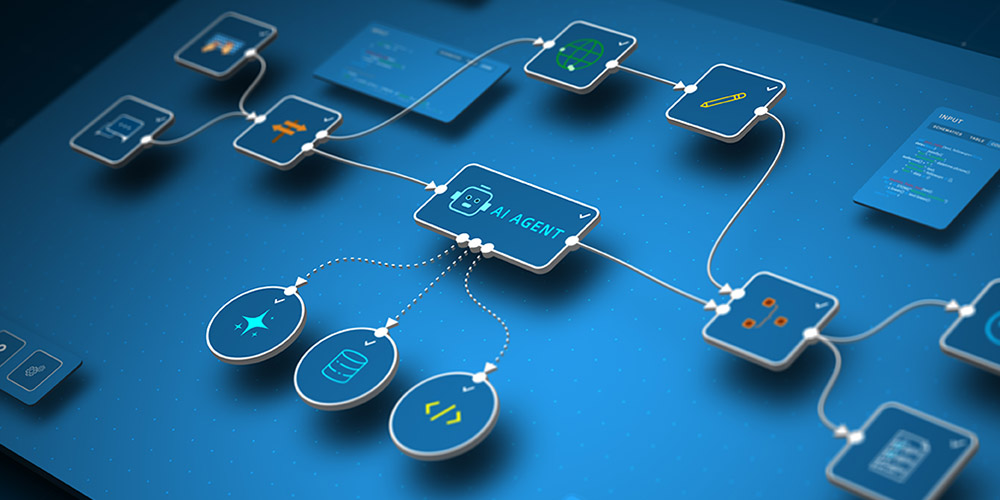
The first agent could identify the enquiry and gather the relevant facts: the customer’s record, previous correspondence and any documents the team normally checks. Its output would include links back to the source material, so the person reviewing it can see where a detail came from.
A second agent could prepare a draft reply. It might use an approved description of the company’s services and the facts gathered in the first step. If availability has not been confirmed, the draft should leave that question open. It should never quietly turn an assumption into a promise.
A third step might update an internal task or prepare a note for the account owner. That action has different consequences from drafting text. I would expect the team to decide whether the system can do it automatically, whether someone must approve it, and what should happen if the customer record is incomplete.
You might reasonably ask why this needs several agents. It may not. Separating responsibilities can make a larger workflow easier to inspect and change, but each handover adds time, cost and another place for information to get lost. For some businesses, one agent with access to the right sources will be enough. For others, the better solution will be an ordinary integration with no language model involved in part of the process. For a closer look at the different options, I have written about agents, chatbots and conventional automation.
The design should follow the work. I would want to understand which steps repeat, which ones vary, and which decisions the business is comfortable delegating. That is also how I think about where AI automation creates real leverage in a business.
The difficult cases tell you more than the easy ones
A demonstration usually uses an enquiry that has everything the system needs. Real inboxes are less considerate. A customer may refer to a telephone conversation that was never recorded. Two systems may disagree about their account. A request may sound routine but carry a contractual or financial consequence.
Before building anything, I would take a sample of recent work and look for those cases. How often does a colleague need to ask a question? How does the team spot an error today? If the agent cannot find a reliable answer, where should the work go next? The quality of the context an agent can rely on affects what it can safely do.
That exercise gives us something useful to test. We can measure whether the proposed workflow finds the right information, whether its drafts need substantial correction and whether it recognises when it lacks enough context. We can also measure the time spent reviewing its work. An agent that produces a draft in seconds has achieved little if checking it takes longer than writing the original.
The people doing the job should be involved in that assessment. They often know which fields in a CRM are dependable, which documents are out of date and which exceptions matter. Leaving them out makes it easy to build something that works beautifully against the wrong version of the process.
Small companies and larger teams have different pressures
For a small business, the first useful agent workflow may be quite modest. It could assemble a morning view of enquiries that need attention, prepare background information for an appointment or check that incoming documents contain what a colleague needs to continue. A few hours returned to the team each week could make the work worthwhile, provided the checking and maintenance do not consume those hours again.
A larger company may already have people experimenting with AI in several departments. The immediate question is often how those experiments fit together. Two agents may read the same customer data under different permissions. One team may use a document that another team has replaced. A useful piece of work here is to establish ownership: who is responsible for each workflow, which information it can use, who reviews its actions and who can turn it off.
That becomes particularly important when an agent can do more than prepare a draft. Reading a document, creating a CRM note, changing an account status and sending an external message are different levels of access. I would give a system the access needed for its current job and expand it when testing shows the team can trust that step. People also need a straightforward way to see what happened and correct it.
Cost deserves the same practical attention. The model bill is only one part of it. There is integration work, the time spent checking outputs, changes to source systems and ongoing support when a process changes. I would rather establish those costs against one real workflow than make a broad claim about how many people an agent team could replace. I have written more about the hidden costs of shipping AI into production.
Where OpenClaw comes in
OpenClaw is useful when an agent needs to work across tools, messages and tasks that continue over time. I have written separately about what makes an agent system useful and using OpenClaw for business automation. Those pieces explain more of my thinking without exposing the details of my own setup or anyone else’s information.
For a business project, the choice of platform comes after we understand the workflow. We need to know where the information lives, what access is available, whether the work involves sensitive data and what the team will need to maintain. Sometimes OpenClaw will be a good fit. Sometimes an existing business system or a smaller custom integration will give the team a simpler way forward.
A sensible first engagement could be a workshop with the people who handle a particular task. We would walk through real examples, identify a few opportunities and choose one worth testing. From there, Bonbon Group can help design and build a limited version, assess its results with the team and decide what should happen next. That may lead to a broader agent workflow, a change to the underlying process or a decision to leave part of the work with people.
If you run a business around Newcastle, Leeds or Harrogate and have a task that keeps moving between inboxes, documents and people, I’d be interested to hear about it. You can read more about Bonbon Group’s AI agent workshops and delivery work, or get in touch and tell me what the task involves. Bring an example of the work as it happens today. We can start there.
Related Articles
What makes a useful AI agent system? Lessons from using OpenClaw